

Road Safety Barriers in South Africa: A Complete Guide to Types, Standards, and Selection
Selecting the right road safety barriers in South Africa requires more than choosing a visible physical barrier. Road speed, vehicle type, hazard severity, available space, and required containment all influence the correct specification.
At Armco Superlite, we supply a wide range of road safety equipment for highways, construction and mining sites, municipalities, and other applications across southern Africa.
We are one of South Africa’s leading suppliers and distributors of road safety equipment, with products including permanent and temporary traffic management requirements.
Four Main Types of Road Safety Barriers in South Africa
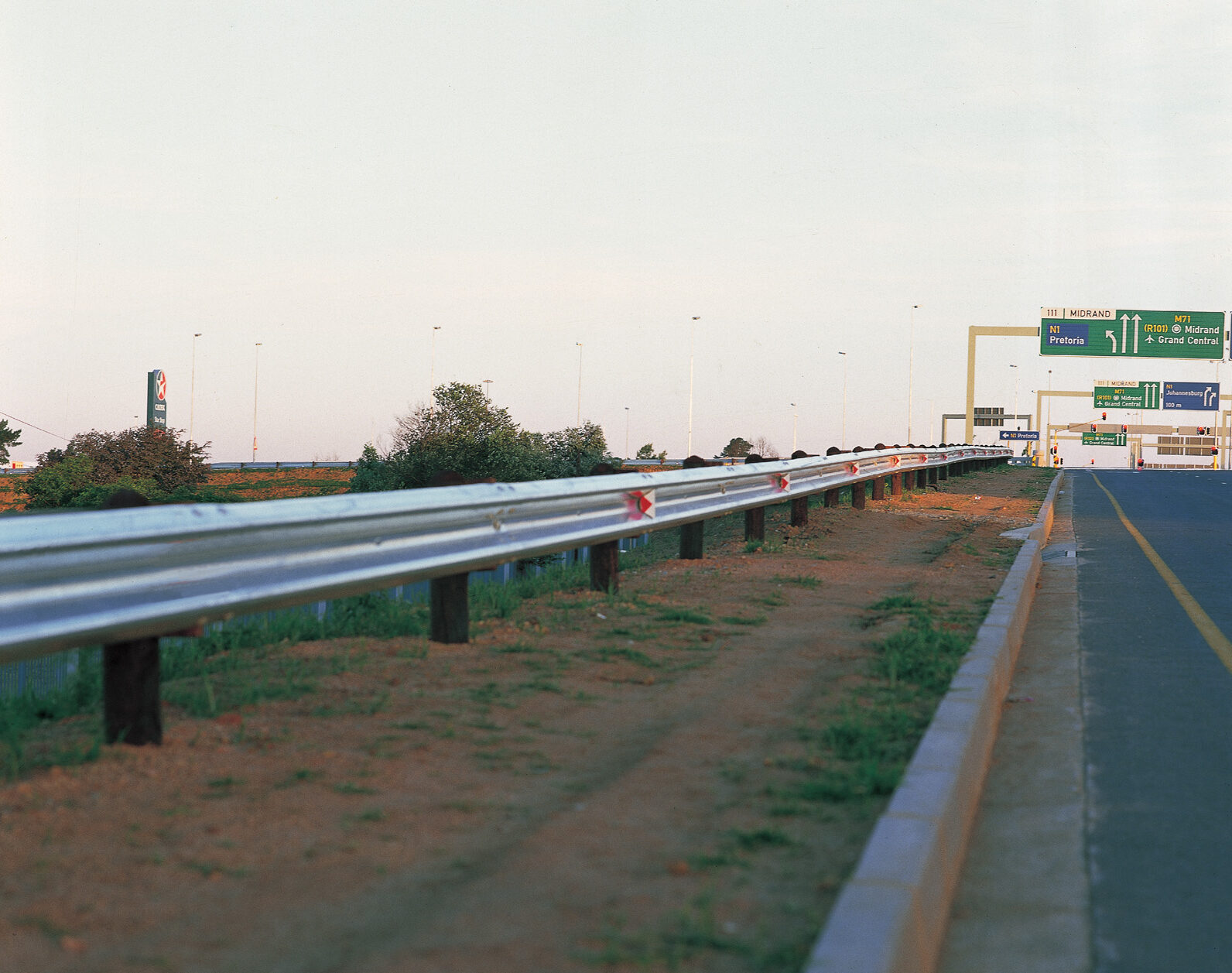
W-beam guardrails are steel semi-rigid barriers engineered to redirect errant vehicles and protect hazards such as steep slopes, bridges, fixed objects, and opposing traffic lanes. At Armco, we supply uncoated and hot-dip galvanized versions, with systems manufactured to SANS 1350; galvanizing follows SANS 121/ISO 1461, while timber posts conform to SANS 457.
Water-filled barriers are lightweight before filling and suit temporary traffic management, roadworks, lane separation, and hazardous areas. Our polyethylene systems are stackable (28 kg version) and interlockable, allowing efficient transport and deployment. These are not advised for high-impact use as impact absorption barriers.
Wire rope safety systems use tensioned cables and posts to redirect vehicles while requiring relatively little lateral space. Our systems are available in different containment and working-width specifications, making them useful for highway barriers in medians and other constrained locations.
Our specialised systems include temporary steel barriers, impact attenuators, crash cushions, terminals, and traffic-calming products. These can provide additional protection at work zones, barrier ends, and other high-risk locations.
How Engineers Specify Road Traffic Barriers
Choose road barriers based on the level of protection needed for a particular road, hazard, and traffic situation. Under SANS 51317-2:2022, safety barriers are assessed using criteria such as containment level, working width, vehicle intrusion, and impact severity.
Knowing the Containment Levels
Containment levels indicate the type and severity of vehicle impact a tested barrier can withstand. Classes include N1 and N2 for normal containment, H1, H2 and H3 for high containment, and H4a and H4b for very high containment.
What Is Working Width?
Working width, classified W1 to W8, indicates how much space a barrier may require behind it during an impact. This is particularly important where clearance is limited.
Before specifying a barrier on the road, engineers should assess road layout, traffic conditions, roadside hazards, containment requirements, and available space. The selected system should have tested performance appropriate to the site and its specific safety requirements.
Permanent or Temporary: Which Road Barrier Is Right?
Permanent steel systems suit established road infrastructure requiring long-term vehicle restraint. A galvanized steel road barrier provides durable roadside protection in exposed environments.
Alternatively, temporary water-filled systems suit construction zones, changing traffic arrangements, and short-term hazards. They can be transported and positioned efficiently, then removed as site conditions change. Therefore, selection should be based on the required safety performance, not installation speed or purchase price.
Steel vs Water-Filled Road Barriers
Steel guardrails provide engineered vehicle containment and are typically selected for permanent installations. Water-filled units offer rapid deployment and strong visual separation for temporary traffic management.
A crash barrier or concrete barrier in South Africa must be specified for its intended environment and tested performance, rather than cost and material alone.
The correct comparison should therefore consider the entire project: installation requirements, working width, containment, maintenance, site duration, and removal requirements. A crash barrier in South Africa must be specified for its intended environment and tested performance, rather than cost and material alone.
Choosing the Right System for Your Road
The most suitable road safety barriers in South Africa depend on road classification, operating speed, traffic composition, roadside hazards, and available recovery area. Engineers should also consider terminals, transitions, posts, foundations, and installation requirements as part of the complete system.
Do It Right with Armco Superlite
At Armco Superlite, we offer W-beam guardrails, water-filled barriers, wire rope systems, and additional road safety equipment, offering contractors and road authorities access to multiple solutions through one specialised supplier.
Consult with us for professional advice and expert opinions concerning all your road safety equipment needs. With a complete portfolio of road safety barriers in South Africa and technical expertise for most southern African conditions, we can help you identify the appropriate system for your project and road safety requirements.